Zambian 2013 Budget Reviewed by Kampamba Shula

On 12 October 2012, the Minister of Finance, Hon. Alexander Bwalya Chikwanda, MP, announced the 2013 National Budget. Budget highlights and taxation and other changes as contained in the Budget speech and the Zambia Revenue Authority (“ZRA”) publication.

INDECO (IDC): Past Problems and Opportunities Analysed by Kampamba Shula

INDECO (IDC): Past Problems and Opportunities Analysed

Critical Review of IMF 2013 Zambia ARTICLE IV CONSULTATION report by Kampamba Shula

Debt management is still on track The agreed norm is that for internal borrowing the threshold is 25 per cent of GDP but our debt stands at K17 billion, which is 15 per cent of GDP and for external borrowing, the threshold is 40 per cent and our debt is US$3.1 billion which is 14 per cent of GDP, so we are far below the agreed norms. So even in the long term , Zambia is still on track.

US Economy 2014 First Quarter Analysis and Outlook by Kampamba Shula

New data shows the U.S. economy contracted in the first quarter of this year, keeping pace with shifting expectations but down sharply from the prior already disappointing estimate.

Zambia Debt Analysis

Some might say that Zambia should not borrow externally and even as sincere as they may be they are wrong. When the Government borrows locally “Crowing out” happens.

Showing posts with label Japanese Deflation. Show all posts

Friday, March 13, 2015

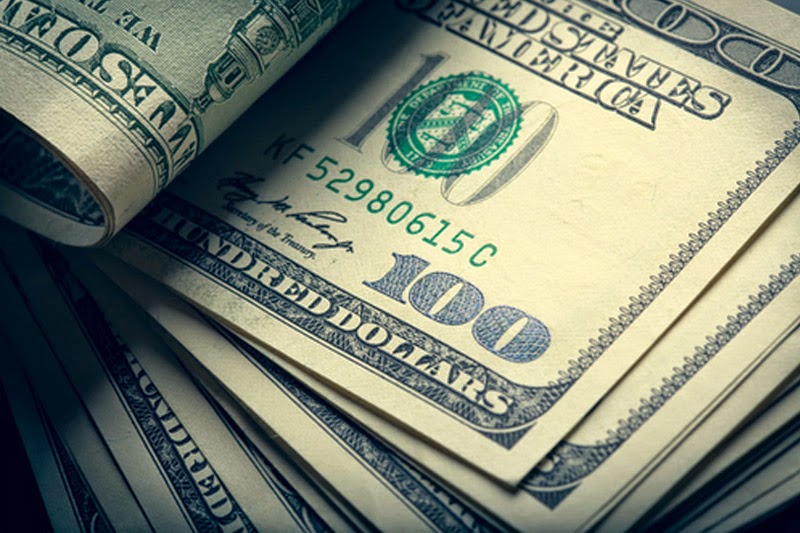
Strong Dollar - An Inflated Currency in a Deflated Global Economy by Kampamba Shula


With flexible exchange rates and wide-spread abandonment of capital controls the dollar is largely free to move up or down as market forces dictate
In this framework it is reasonable to infer that any observed weakening or depreciation of the dollar is most likely the result of a reduced demand for dollars in the foreign exchange market, an increased supply of dollars in that market, or some combination of both forces. Similarly, an appreciating, or strong dollar, is the consequence of an increase in the demand for dollars, or a decreased supply of dollars, or both in the foreign exchange markets.
The volume and speed of international asset transactions far exceed those of goods transactions. This means that at any point in time it is most likely that the relative demand for assets here and abroad will be the dominant force in the foreign exchange market, transmitting the essential energy that drives movement in the exchange rate for the dollar and other widely traded currencies.
Expectations about the future path of the exchange rate itself will figure prominently in the investor’s calculation of what she will actually earn from an investment denominated in another currency.  Even a high nominal return would not be attractive if one expects the denominating currency to depreciate at a similar or greater rate and erase all economic gain.  On the other hand, if the exchange rate is expected to appreciate the realized gain would be greater than what the nominal interest rate alone would indicate and the asset looks more attractive.
There is also likely to be a significant safe-haven effect behind some capital flows.  This is really just another manifestation of the balancing of risk and reward by foreign investors. Some investors may be willing to give up a significant amount of return if an economy offers them a particularly low risk repository for their funds. In recent decades the United States, with a long history of stable government, steady economic growth, and large and efficient financial markets can be expected to draw foreign capital for this reason.
The greenback is trading at a 12-year high against the euro and 8-year high versus the Japanese yen. This strength is, in many respects, a sign that the economy in the United States is much healthier than Europe, Japan and many other parts of the world. The strengthening of the USD in recent times has caused some element of volatility in the currency markets across the globe and almost all emerging markets' currencies have been affected on this score as they have tended to depreciate.
The US Federal Reserve has withdrawn the QE completely on the premise that the economy is picking up and that unemployment levels are low and within acceptable limits. This indicates that the economy is going to record a healthy growth rate from 2015 onwards. Also, interest rates are expected to increase in mid-2015 with the Fed tracking the inflation numbers.
Quantitative easing meanwhile continues to be dominating the economies of Japan and the euro region with China is also showing signs of easing rates. Any kind of affirmative action to revive an economy is taken to mean a weak economy and by implication a weak currency. This has propped up the USD which appears to be the strongest currency today.
Diverging central bank policy has created a perfect launch pad for the dollar to move higher, particularly against the euro. The Fed is expected to push interest rates higher in the next several months, while the European Central Bank embarked on a quantitative easing bond buying program recently. Some analysts expect the Fed to hike rates in September. The currency-weakening moves by the SNB, ECB and others across the globe have spurred talk about a renewed currency war as countries adopt a beggar-thyneighbor policy to spur growth.
Generally, the financial health of a country, as measured by deficits and debt and forecasts of deficits and debt accumulation, plays an important role in driving the relative currency valuation of a particular country. Countries that have chronic deficits and growing debt burdens ultimately end up in a weaker position in the foreign exchange markets, albeit sometimes with considerable lag times.
The present strength of the dollar is temporary and can also be seen as the penultimate stop in a flight to safety. When the next financial crisis unfolds as it surely will gold, precious metals and even structured alternatives like bitcoin are likely to be the next and last stop.
Predicting the path of the dollar is always a problematic endeavor.  Economic fundamentals predict that the dollars near-term path will broadly reflect the resolution by international investors of an ongoing balancing of risk and return.
Economic growth in the United States in 2014 showed signs of recovery and this may have translated into an increase of the expected return on dollar assets. In addition, the Fed is expected in mid-2015 to increase short-term interest rates. In contrast, both the euro area and Japan have demonstrated that they have firmly established economic contractions underway, and they have currencies that are not expected to appreciate. These changes suggest that the expected yield advantage of dollar assets has been strengthened. If so, this presents foreign investors, with an already strong need to diversify into dollar assets of an attractive sustained and safe rate of return. This change in incentives could be sufficient to induce a significant move away from yen and euro assets.
The US dollar is expected to appreciate over the near term against major convertibles. The reason for this is mostly down to a global monetary policy divergence between the U.S and the rest of the world. With the EU and Japan fighting deflation using QE, they are inadvertently propping up the Dollar.
This appreciation of the Dollar though due in a small part to stronger US growth is at the most part an inflated effect of deflated global economy. A disorderly adjustment is probable, but not inevitable.

Click here to download the full report

Tuesday, February 12, 2013

Japanese Deflation Reviewed


In monetarist theory, deflation must be associated with either a reduction in the money supply, a reduction in the velocity of money or an increase in the number of transactions. But any of these may occur separately without deflation. It may be attributed to a dramatic contraction of the money supply, or to adherence to a gold standard or other external monetary base requirement.
Danger Seen in Pension Fund Cuts on Abe Inflation
 However, deflation is the natural condition of hard currency economies when the supply of money is not increased as much as positive population growth and economic growth. When this happens, the available amount of hard currency per person falls, in effect making money more scarce; and consequently, the purchasing power of each unit of currency increases. Deflation occurs when improvements in production efficiency lower the overall price of goods. Competition in the marketplace often prompts those producers to apply at least some portion of these cost savings into reducing the asking price for their goods. When this happens, consumers pay less for those goods; and consequently deflation has occurred, since purchasing power has increased.

The effects of deflation are:

 1.Decreasing nominal prices for goods and services

 2.Increasing buying power of cash money and all assets denominated in cash terms

 3.May decrease investment and lending if cash holdings are seen as preferable (aka hoarding)

 4.Benefits recipients of fixed incomes

During severe deflation, targeting an interest rate (the usual method of determining how much money to create) may be ineffective, because even lowering the short-term interest rate to zero may result in a real interest rate which is too high to attract credit-worthy borrowers. Thus the central bank must directly set a target for the quantity of money (called "quantitative easing") and may use extraordinary methods to increase the supply of money, e.g. purchasing financial assets of a type not usually used by the central bank as reserves (such as mortgage backed securities). Before he was Chairman of the United States Federal Reserve, Ben Bernanke claimed in 2002, "...sufficient injections of money will ultimately always reverse a deflation", although Japan's deflationary spiral was not broken by this very sort of quantitative easing.

JAPAN
Japan Finance Minister Models Policy After 1930s Stimulus
Deflation started in the early 1990s. The Bank of Japan and the government tried to eliminate it by reducing interest rates and 'quantitative easing', but did not create a sustained increase in broad money and deflation persisted. In July 2006, the zero-rate policy was ended.

 Systemic reasons for deflation in Japan can be said to include:

JAPAN, one of the great exporting nations, usually runs a trade deficit with, of all places, Switzerland. Why? Ask Rolex. Japan also buys more from France and Italy than it sells there. Why? Bordeaux, Brie, mascarpone and Armani, to name a few expensive vices. In Japan such delicacies are mostly immune to deflation, while prices of everyday goods like cars, electronic goods and clothes tumble. Why then do Japanese firms continue to churn out the latter, even though margins are low? And could this help explain Japan's persistent deflation problem?
These questions preoccupy Kosuke Motani, author of “The Real Face of Deflation”. In this book's first seven months in print, 500,000 copies have been sold, including one to Naoto Kan, the prime minister. Mr Motani argues that deflation in Japan is not so much a monetary problem as a structural one linked to bad business decisions and demography.

 If Japanese firms produced new types of luxury goods, he believes, they could unleash pent-up demand among Japan's growing, and wealthy, ranks of old people and pay higher wages to Japan's shrinking, and relatively poor, youth. Unsurprisingly, his views have won a sympathetic hearing at the Bank of Japan (BoJ), which has often been accused of failing to do enough to reverse falling prices.


Japanese Finance Minister Taro Aso said the government is imitating his Depression-era predecessor, Korekiyo Takahashi, who told the Bank of Japan (8301) to underwrite government debt to fund deficit spending.

“There is no one in the government, the bureaucracy or the BOJ who has experience in anti-deflation policy,” Aso said yesterday in an interview on NHK television. “We can only learn from history,” he said, adding that the new administration is looking to Takahashi’s example

As finance minister in 1932, Takahashi increased fiscal spending by 34 percent, doubled bond issuance and instructed the BOJ to underwrite government debt, according to a report by the Japan Center for Economic Research. While the effort helped end deflation and boost growth, Takahashi made enemies in the military when he later attempted to rein in spending. He was assassinated in 1936.


Takahashi “brilliantly rescued Japan from the Great Depression through reflationary policies,” Federal Reserve Chairman Ben S. Bernanke said in a speech in 2003. His policy package increased the fiscal deficit, depreciated the currency and expanded the money stock, with robust growth and mild inflation for the five years from 1933, according to a research paper co-authored by Masato Shizume, an economist working for the BOJ.


“If a central bank starts to underwrite government bonds, there may be no problems at first, but it would lead to a limitless expansion of currency issuance, spur sharp inflation and yield a big blow to people’s lives” and the economy, as has happened in the past, BOJ Governor Masaaki Shirakawa said in 2011. The central bank took the step in the 1930s because the debt market was “very immature,” Shirakawa said.

Under Takahashi’s initiative, the BOJ’s underwriting continued for 14 years until the end of World War II, with the ratio of bonds bought by the central bank peaking in 1933 at 89.6 percent, according to a 2001 paper by the central bank.

Now, the BOJ purchases government bonds through the secondary market, and includes the securities in its 76-trillion yen asset-purchase program.

Since taking office in December, Abe’s government has announced fiscal stimulus to boost an economy in recession, with the BOJ agreeing to a 2 percent inflation target requested by the government and announcing open-ended asset purchases in a bid to stop more than a decade of falling prices.

Aso told lawmakers in Parliament today that the government will try to maintain trust in its fiscal management.