

Zambian 2013 Budget Reviewed by Kampamba Shula
On 12 October 2012, the Minister of Finance, Hon. Alexander Bwalya Chikwanda, MP, announced the 2013 National Budget. Budget highlights and taxation and other changes as contained in the Budget speech and the Zambia Revenue Authority (“ZRA”) publication.

INDECO (IDC): Past Problems and Opportunities Analysed by Kampamba Shula
INDECO (IDC): Past Problems and Opportunities Analysed

Critical Review of IMF 2013 Zambia ARTICLE IV CONSULTATION report by Kampamba Shula
Debt management is still on track The agreed norm is that for internal borrowing the threshold is 25 per cent of GDP but our debt stands at K17 billion, which is 15 per cent of GDP and for external borrowing, the threshold is 40 per cent and our debt is US$3.1 billion which is 14 per cent of GDP, so we are far below the agreed norms. So even in the long term , Zambia is still on track.

US Economy 2014 First Quarter Analysis and Outlook by Kampamba Shula
New data shows the U.S. economy contracted in the first quarter of this year, keeping pace with shifting expectations but down sharply from the prior already disappointing estimate.

Zambia Debt Analysis
Some might say that Zambia should not borrow externally and even as sincere as they may be they are wrong. When the Government borrows locally “Crowing out” happens.
Thursday, October 25, 2012
Happy 48th Independence Zambia!!
Monday, October 22, 2012
Euro Debt Crisis : Greece Reviewed by Kampamba Shula

The Euro Debt Crisis
Greece
In the early mid-2000s, Greece’s economy was one of the fastest growing on the Eurozone and was associated with a large structural deficit. As the world was hit by the global financial crisis in the late 2000s, Greece was hit especially hard because its main industries which are shipping and tourism were especially sensitive to changes in the business cycle. The government spent heavily to keep the economy functioning and the country’s debt increased accordingly.
Nevertheless, although in August 2009 the Greek spread
declined to 121 b.p., it was clear that, relative to other periphery EMU countries,
markets continued to have Greek and Irish bonds on their bad books.
Greek
Fundamentals
In the first-generation crisis model proposed by Paul
Krugman (1979) the speculative attack against a currency peg is the
deterministic outcome of an unsustainable fiscal expansion pursued by a myopic
government and financed by excessive money creation depleting foreign currency
reserves. When reserves fall below a critical threshold, rational agents, in
anticipation of the peg’s future collapse, buy the government’s remaining
reserves forcing an immediate devaluation. This restores the exchange rate to a
value consistent with Purchasing Power Parity (PPP).
This story’s basic premise, i.e. unsustainable fiscal
policy, is clearly present in the case of Greece. Also, since EMU accession in
2001 the country has experienced consistently higher inflation than the EMU
average, resulting in substantial deviation from PPP, pronounced
competitiveness losses and record current account deficits (see Arghyrou and
Chortareas, 2008). Overall, there is little doubt that Greek fundamentals have
deteriorated enough to justify a first-generation attack had Greece run a
currency of its own.
But when compared to the collapse of a conventional
peg, debt default is a much rarer and therefore much less likely event, particularly
for a Eurozone member with additional access to IMF emergency cash. So,
although the deterioration of Greek fundamentals plays a key role in current events,
the crisis’ escalation in November 2009 is unlikely to have been caused by
market fears of an imminent Greek debt default.
The proposed budget submitted to the EU in
mid-November 2010 was a game changer, as it shifted the balance of expectations
from credible to no credible commitment, putting Greece from the flat to the
steep loss function (L2). This explains the steep increase in Greek bond
spreads observed in mid- November/December 2009 in the absence of further
negative news on fundamentals.
If the analysis above is correct, what we have
observed in November 2009 was the mutation of a challenging crisis of
deteriorating fundamentals into a full blown crisis of confidence in the Greek
monetary regime. This explains the failure of the announced EU/IMF rescue plan
to relieve the pressure on Greek spreads. The plan failed to do so because the
Greek spread was not only driven by an increasing risk of default (to be fully
explained below) but also increasingly strong expectations that Greece cannot
bear, or is not willing to bear, the cost of reforms necessary to stay in the
euro. In other words, the markets worry that Greece will eventually opt for a voluntary
exit from the EMU causing Greek bond holders capital losses through currency
devaluation.
Events then moved as follows: In the absence of an
effective EU-sponsored mechanism of fiscal monitoring and imposing reform,
Greek governments over 2001- 2009 did not implement sound economic policies,
thus allowing further deterioration of fundamentals.
Current
Events
On 23 April 2010, the Greek government requested an initial
loan of 45 billion Euros from the EU and International Monetary Fund to cover
its financial needs for the remaining part of 2010.A few days later Standard
& Poor’s slashed Greece’s sovereign debt rating to BB+ or junk status, in
which case investors where liable to lose 30=50% of their money.
On 1 May 2010, the Greek government announced a series
of austerity measures to secure a three year 110 billion loan. This was met
with massive protests and social unrest throughout Greece. The Troika (EU,ECB
and IMF), offered Greece a second bailout loan worth 130 billion Euros in
October 2011, but with the activation being conditional on implementation of
further austerity measures and a debt restructure agreement.
All the implemented austerity measures, have so far
helped Greece bring down its primary deficit - i.e. fiscal deficit before
interest payments - from €24.7bn (10.6% of GDP) in 2009 to just €5.2bn (2.4% of
GDP) in 2011, but as a side-effect they also contributed to a worsening of the
Greek recession, which began in October 2008 and only became worse in 2010 and
2011.The austerity relies primarily on tax increases which harms the private
sector and economy. Overall the Greek GDP had its worst decline in 2011 with
−6.9%, a year where the seasonal adjusted industrial output ended 28.4% lower
than in 2005, and with 111,000 Greek companies going bankrupt (27% higher than
in 2010).As a result, the seasonal adjusted unemployment rate also grew from
7.5% in September 2008 to a record high of 19.9% in November 2011, while the
Youth unemployment rate during the same time rose from 22.0% to as high as
48.1%.
Some economic experts argue that the best option for
Greece and the rest of the EU, would be to engineer an “orderly default”,
allowing Athens to withdraw simultaneously from the Eurozone and reintroduce
its national currency the drachma at a rebased rate.
However, if Greece were to leave the euro, the
economic and political consequences would be devastating. According to Japanese
financial company Nomura an exit would lead to a 60% devaluation of the new
drachma. Analysts at French bank BNP Paribas added that the fallout from a
Greek exit would wipe 20% off Greece's GDP, increase Greece's debt-to-GDP ratio
to over 200%, and send inflation soaring to 40%-50%.Also UBS warned of
hyperinflation, a bank run and even "military coups and possible civil war
that could afflict a departing country". Eurozone National Central Banks
(NCBs) may lose up to €100bn in debt claims against the Greek national bank
through the ECB's TARGET2 system. The Deutsche Bundesbank alone may have to
write off €27bn.
To prevent all this from happening, the troika (EU,
IMF and ECB) eventually agreed in February 2012 to provide a second bailout package
worth €130 billion, conditional on the implementation of another harsh
austerity package, reducing the Greek spending with €3.3bn in 2012 and another
€10bn in 2013 and 2014.[93] For the first time, the bailout deal also included
a debt restructure agreement with the private holders of Greek government bonds
(banks, insurers and investment funds), to "voluntarily" accept a
bond swap with a 53.5% nominal write-off, partly in short-term EFSF notes,
partly in new Greek bonds with lower interest rates and the maturity prolonged
to 11–30 years (independently of the previous maturity).
On 9 March 2012 the International Swaps and
Derivatives Association (ISDA) issued a communique calling the debt
restructuring deal with its private sector involvement (PSI) a
"Restructuring Credit Event" which will trigger payment of credit
default swaps. According to Forbes magazine Greece’s restructuring represents a
default. It is the world's biggest debt restructuring deal ever done, affecting
some €206 billion of Greek government bonds. The debt write-off had a size of
€107 billion, and caused the Greek debt level to fall from roughly €350bn to
€240bn in March 2012, with the predicted debt burden now showing a more
sustainable size equal to 117% of GDP by 2020, somewhat lower than the target
of 120.5% initially outlined in the signed Memorandum with the Troika.
Critics such as the director of LSE's Hellenic
Observatory argue that the billions of taxpayer euros are not saving Greece but
financial institutions, as "more than 80 percent of the rescue package is
going to creditors—that is to say, to banks outside of Greece and to the ECB. The
shift in liabilities from European banks to European taxpayers has been
staggering.
One study found
that the public debt of Greece to foreign governments, including debt to the
EU/IMF loan facility and debt through the euro system, increased from €47.8bn
to €180.5bn (+132,7bn) between January 2010 and September 2011, while the
combined exposure of foreign banks to (public and private) Greek entities was
reduced from well over €200bn in 2009 to around €80bn (-120bn) by mid-February
2012.
Economeka Recomendations by Kampamba Shula
The restructuring of Greek economy based on austerity alone is bound to fail unless it is inclusive of viable growth targets.Greece can not leave the Euro, the effects of such a move would be fatal to Greece and the periphery countries like Italy,Spain,Portugal.Time needs to be given to Greece for these reforms to be part of strategy that the Greek people believe is inclusive of Growth.This will in turn translate to business confidence which will help change investor perspective on Greek Bonds and bring yields down.
References
The restructuring of Greek economy based on austerity alone is bound to fail unless it is inclusive of viable growth targets.Greece can not leave the Euro, the effects of such a move would be fatal to Greece and the periphery countries like Italy,Spain,Portugal.Time needs to be given to Greece for these reforms to be part of strategy that the Greek people believe is inclusive of Growth.This will in turn translate to business confidence which will help change investor perspective on Greek Bonds and bring yields down.
References
"Crisis
in Euro-zone—Next Phase of Global Economic Turmoil". Competition master
date =. Retrieved 24 February 2012.
Michael G. Arghyrou, J. D. (2010). THE GREEK DEBT
CRISIS: LIKELY CAUSES, MECHANICS AND OUTCOMES. Cardiff: Cardiff
University.
Wednesday, October 3, 2012
Google Stock Analysis Compiled by Kampamba Shula

Google Stock Analysis
Google's stock price
rose 1 percent to $761.78 at the close of the stock markets in New York on Oct.
1, for a market capitalization of about $249.9 billion, according to a report
from Bloomberg BusinessWeek. That's higher than the $247.2 billion stock
valuation for Microsoft, which fell less than 1 percent to $29.49 per share,
according to Bloomberg.
Among technology
companies, though, both Google and Microsoft still trail Apple, which is ranked
first in market valuation at $618.1 billion. Apple's valuation topped
Microsoft's back in 2010 as iPhones and iPads began their marches to sales
successes.

In addition, it offers Android, an open source mobile
software platform; Google Chrome OS, an open source operating system; Google
Chrome, a Web browser; Google+ to share different things online with different
people; Google TV, a platform for the consumers to use the television and the
Internet on a single screen; and Google Books platform to discover, search, and
consume content from printed books online. Further, the company provides Google
Apps, a cloud computing suite of message and collaboration tools, which primarily
includes Gmail, Google Docs, Google Calendar, Google translate, and Google
Sites; Search Appliance, a search technology for use within enterprises; Google
Site Search, a custom search engine; Google Commerce Search for online retail
enterprises; Google Maps Application Programming Interface for businesses; and
Google Earth Enterprise, a firewall software solution for imagery and data
visualization. Google Inc. was founded in 1998 and is headquartered in Mountain
View, California.
Growth Opportunities and Success
The shares got a boost last week from a Citigroup note
advising investors that the Google stock price could “rise significantly in the
12 months ahead.” A note Monday from Trip Chowdhry at Global Equities Research
said both Google and Apple have “strong momentum” in the mobile Internet sector
while “developer interest in Windows Phone is almost non-existent.” Chowdhry
added that Google’s “innovation velocity far exceeds any other company.”
Enthusiasm for Microsoft has been lukewarm, despite its upcoming launch of the
Windows 8 operating system and a push into the tablet and phone markets.
The latest data from technology research firm comScore, Inc.
(NASDAQ:SCOR) revealed that Google Inc (NASDAQ:GOOG) and Samsung Electronics
Co., Ltd. (LON:BC94) maintained their position as leaders in the smartphone
market.
During the three
month period ending in August, the survey found that Google’s Android operating
system is the number one smartphone platform in the United States, with 52.6
percent market share, a 1.7 percent increase from its previous market share of
50.9 percent in May.
Apple Inc. (NASDAQ:AAPL) is 18.3 percent behind Google Inc (NASDAQ:GOOG)
with 34.3 percent market share. The company’s market share increased by 2.4
percent during the three month period, compared with its previous 31.9 percent
market share in May. The data also indicates that both technology giants Apple
and Google are absorbing the market shares of RIM, Microsoft, and Symbian as
the companies continue to lose market share.
Valuation
|
Valuation Measures
|
|
The Forward P/E ratio still gives us a good incentive to
assume that Google still poses immense growth opportunities in the near future.
The price to book value also looks decent given its market cap.
Threats and Weaknesses
For Google to keep growing, it needs access to a wider range
of content on which it can place ads and make money, particularly as the tech
landscape shifts and consumers' Internet habits evolve.
The strategy is not cheap, requiring significant investments
for Google to build or buy platforms to reach new content -- adding pressure on
the bottom line. And many of the new markets may not be as profitable as the
search ad business where Google rules the roost, said Cusumano.
Google does not disclose how much money it has spent on
Google+. But analysts believe much of Google's aggressive hiring during the
past year -- its headcount swelled to more than 8,000 employees in 2011 alone
-- was to feed its social efforts as it seeks to challenge Facebook's 800
million user network.
With mobile and display representing greater portions of
Google's business, some say the time has come for the company to be more
forthcoming to push its price/earnings multiple higher.
"If they want multiple expansion they need to provide
more clarity," said National Alliance Capital Markets analyst Mike Hickey.
"If someone asks them how's an aspect of the business 'terrific' just
doesn't cut it anymore."
It is, however, unlikely that Google will go so far as to
provide financial forecasts -- a practice the company has shunned since its
earliest days.
But more consistent and detailed reporting of some of its
key businesses could bolster Wall Street's faith in the company's prospects
outside search, and quell some of the persistent anxiety about its spending.
Summary
In short Google is a wonderful company and investment with scary growth potential given that it seems to want to acquire any advertising platform possible.This aggressive tactic seems to confuse investors who fail to recognise the new Google.
In my personal view this strategy by Google is pure genius,quite risky but its pure genius.Apple may have the niche market for now and Microsoft the legacy but Google wants everything and I mean everything.
Tuesday, October 2, 2012
Volcker, Bernanke and Investors on QE and Bond buying

Paul Volcker, former chairman of the Federal Reserve, said
the U.S. central bank’s latest bond-buying program isn’t creating inflationary
pressure. This comes as Ben Bernanke defended the Federal Reserve's
unprecedented bond buying.
Economeka
My assumption about Ben Bernanke and the Federal Reserve is
they will keep interest rates at zero until upward inflationary pressures surface.
Given that unemployment numbers are still going up this places pressure on the
Federal Reserve to keep those numbers down.

From Ben Bernanke’s speech we can deduce that he expects the
public and private sector to do what they can to get unemployment down. By
keeping interest rates near 0% this provides an incentive for the private
sector to borrow finance at an affordable rate and create employment.
The U.S. jobless rate rose to 8.2 percent last month from
8.1 percent in August, according to the median forecast of 79 economists
surveyed by Bloomberg News before the Labor Department report Oct. 5. Payrolls
increased by 115,000 in September, less than the 139,000 average over the first
eight months of the year, according to a separate survey.
The Fed said Sept. 13 that it will buy $40 billion of
mortgage bonds a month until the U.S. sees what Chairman Ben S. Bernanke
described as an “ongoing, sustained improvement in the labor market.” The
central bank also said it will probably hold the federal funds rate near zero
at least through mid-2015

Now according to Milton Friedman, there exists a natural
rate of unemployment and Inflation is always and everywhere a monetary
phenomenon. Paul Volcker’s assurance that this Bond buying strategy coupled
with a low federal funds rate will not increase inflation goes a long way to
support the Federal Reserve. Investors doubt that the Federal Reserve’s
announcement of additional quantitative easing will get Americans to spend
more.

U.S. gross domestic product expanded at a 1.3 percent annual
rate in the second quarter, less than the previous estimate of 1.7 percent and
below the first quarter’s 2 percent pace, says data from the Commerce
Department show.
Now that a third wave of easing has become reality,
continued lackluster job growth and the looming fiscal cliff may temper
investor sentiment, according to Cook, who helps oversee more than $480 million
in assets.
Employers added 87,400 jobs a month on average in April
through August, compared with 211,400 in the preceding five- month period; and
the jobless rate, at 8.1 percent in August, has been stuck above 8 percent
since February 2009, Labor Department data show. Meanwhile, the U.S. faces
higher taxes and reductions in spending on government programs that will take
effect at year-end unless Congress acts.
Wednesday, September 26, 2012
Purchase Baking New Cakes By Natasha Mwila

New Book by Natasha Mwila.
The South African business landscape has had notable innovative contributions from an industry largely wrongly categorised as being too informal to warrant scholarly and public attention. The 'home industry' could not represent a farther reality. The industry represents business undertakings involving home based production of goods. This industry hones the talents and skill of a large proportion of the population and when nurtured is capable of providing secure employment. The unique nature of goods and services supplied by this industry call for an innovative approach to business and with that highly complex management strategies. This book endeavours to explore this industry through the eyes of the most successful player in the industry, Koljander. A case study is developed to trace Koljander's origins, present challenges and opportunities as well as future prospects in the context of continuous innovation within the business. Extant literature is drawn on to provide academic explanations for the inspirational phenomena observed in the business. This book will appeal to students and researchers of business management as well as individuals interested in enterprise development.
Purchase Baking-new-cakes NOW!!
Tuesday, September 18, 2012
Zambia's $750 mil EuroBond :Talk time example

A need has arisen to explain the recent Eurobond issue by the Zambian Government using an example that everyone can relate to and understand, talk time.
Now Airtel, a mobile service provider in Zambia, has a promotion called Siliza. This allows you to borrow air time when you have nothing in your account. We shall use an adapted version of this promotion to explain the Euro Bond.
Now before we begin, we must explain two key terms that are vital to understanding a Eurobond. The first is the Principal; this is the amount that is borrowed to be paid back at the maturity of the Bond which is after the period of the bond has elapsed in this case 10 years.
The next term is called the Coupon Rate; this is a rate of interest Annually. The Coupon rate is calculated as a percentage of the principal in this case the coupon rate is 5.375%.
We can now get to the example that uses talk time to explain the Eurobond. Let us take for example a guy by the name of Chuck Bass who puts K 50, 000 talk time in his phone every day. On one fateful day, Chuck Bass runs out of talk time making a call to his girlfriend Blair, and since he needs to tell her that he loves her he decides to borrow K 7,500 from Airtel like a Eurobond to be paid after 10 days. This is what will happen; since Chuck Bass puts K 50,000 in his phone account every day, and the coupon rate is paid bi-annually, Airtel will take 5% of the amount he borrowed after every day 2.5% after every 12 hours which is half a day(bi annual is half a year).
Now 5% of K 7, 500 is K375, which means Airtel will deduct K187.5 (2.5%) after every 12 hours and per day Airtel will deduct K375 .This will happen for the next 10 days, after which Chuck Bass will pay the principal (K7,500)through his phone account and the balance would have been cleared.
Now to relate this to the Euro Bond, the principal which is the money that the Zambian Government borrowed is $750 million and the annual budget for Zambia as from last year’s figures is $5 billion.
The coupon rate paid is 5.375% but we round it off to 5%.Now what follows here is important. The money that Chuck Bass borrowed which is K 7, 500 represents the money that the Zambian Government has borrowed which is $750 million. The money that Chuck Bass puts in his phone account every day which is K 50, 000 represents the annual budget of Zambia which is approximately $5 billion.
The 10 days that it takes Chuck Bass to pay back the borrowed Airtime represent the 10 years it will take the Zambian government to pay back the principal and the coupon in Full at maturity.
The same way you would calculate how much Chuck Bass pays Airtel is the same way you would calculate how much the Zambian Government will pay Euro Bond holders.
Note that Chuck Bass is a fictional character; any resemblances in person or by chance are completely unintentional.
A note has to be included on the time value of money as the reason why bonds exist.Inflation reduces the value of money gradually so hence bonds are the best way to prevent loss of value through the time value of money.
It must also be noted that capital projects go hand in hand with long term bonds like building a hydro power station which have high return afterwards and can pay of its dues effectively.
Thank you goes to Mr Masengo for correcting the coupon payments part of this example.
A note has to be included on the time value of money as the reason why bonds exist.Inflation reduces the value of money gradually so hence bonds are the best way to prevent loss of value through the time value of money.
It must also be noted that capital projects go hand in hand with long term bonds like building a hydro power station which have high return afterwards and can pay of its dues effectively.
Thank you goes to Mr Masengo for correcting the coupon payments part of this example.
Kampamba Shula BSc Economics
Zambia's $750 MIL Euro Bond Explained in Simple English

My friend is a bricklayer and works peacework sometimes which varies in amounts,but lets put an estimate of K10,000 a day.
Everyday he comes to the bar to have a drink of his favourite brew "shake shake".Now for example assuming one day food runs out at home and he has to spend his last money on food and does exaclty that, leaving him nothing for his favourite brew.
Assuming he still wants to drink,he agrees with the bar tender that he will borrow one packet of brew which costs K2500 and will pay it back like a Euro Bond over 10 days.
Now Follow me, this means he will pay the coupon rate of 5% everyday for 10 days.This means he will pay the bartender K125 (5% of K2500) everyday for 10 days.
At the end of the 10 days he will pay the bar tender the original K2500 for the brew and his debt will be cleared.
Now, the 10 days represents 10 yrs,the K2500 represents a quarter of K10,000 which is the same as $750 million which Government borrowed as a quarter of Zambia's annual budget of $3 billion.The coupon rate is 5.375% to be exact but everything is exactly done in the same way as the example above.
Any Questions???
Monday, September 17, 2012
Zambia's Inaugural $750 million Bond Evaluated By Kampamba Shula

Zambia has issued a USD 750 Million inaugural International Bond which was over-subscribed 24 times by 425 Global Investors, thereby representing Sub-Saharan Africa’s largest ever book order.
ISSUES TO CONSIDER
1. Conducted 5-day roadshow covering the key institutional accounts in London, Los Angeles, San Francisco, Boston and New York.
2. Inaugural 10-year International Bond Issue.
3. Raised US$750 million at a coupon of 5.375%.
4. Only the second international bond issuance from Sub-Saharan Africa in 2012 year-to-date(first issuance South Africa’s 2024 offering).
5. Testifies to the potential of Zambia’s economy and the strength of international investor interest in the country.
6. The transaction was announced prior to the U.S. markets opening at 5.30am (EST) on 13 September 2012.
7. Order book of approximately US$12 billion from over 425 investors globally.
8. Transaction priced intraday on an accelerated basis within approximately 6 hours of announcement.
9. The transaction boasted the largest orderbook ever and lowest coupon achieved by a Sub-Sahara African debut international bond issue.
10. Transaction primarily attributed to US investors (56%), followed by those in Europe (40%), Asia (3%) and others (1%). The high quality of investor participation is reflected in the broad distribution to various investor types including Fund Managers receiving 85% of allocations, followed by Private Banks / Banks 8%, Pension / Insurance Funds 5% and others 2%.
11. Barclays and Deutsche Bank acted as lead-managers and joint book-runners on the transaction.
Economeka Consulting (Kampamba Shula)
Last year in his budget the Honorable Finance Minister Alexander Chikwanda announced the Zambian Government's plan to go to the International capital market to issue a first sovereign bond in the amount of $500 million.
This route was an alternative source of financing to secure resources for service delivery by the Zambian Goverment particularly for road and energy infrastructure development.
Those expectations where exceeded on 13 september 2012 when the Zambian goverment issued an inaugural 10 year bond issue to the tune of $750 million.This was on account of the exceeding large order book with a total subscription of $11.9 billion, which works out at 24 times over and above the intended amount of $500 million.
This is not only the largest order book for sub saharan africa but also at 5.375% the lowest coupon rate,meaning the most favorable price.
The fact that zambia is able to garner such huge and unprecedented interest from the international investor community is testimony of the confidence the world reposes in zambia.
According to a statement from the minister all borrowings are intended to be spent on growth projects and social sectors of health and education.The minister hinted at a predominance of funding outlays towards the power sector, for instance $186 million will be allocated towards the Zambian Government's equity into the kafue gorge lower hydro power scheme.
The minister said it is important to use this goodwill to get on a sustainable growth trajectory.I concurr with his view.
There are a few recommendations I would like to suggest in the use of these funds.Given that some funding will go to health and education ,clear lines of accountability and responsibility need to be drawn to give clarity on the trajectory.
As the minister noted most of the funding outlays should be directed at the energy sector.My recommendations would be to look at alternative sources of energy.If zambia is to get on a path of sustainable development we cannot ignore alternative energy sources.The reason for this is the unsatisfied need for industry in zambia.


In this regard I am referring to creating facilities that would change the health lanscape in rural areas.In addressing the ever present dilemna which is HIV/AIDS, sustainable treatment facilities should be created.
According to Jane Phiri a practising registered nurse “It is undoubtedly true that health in rural Zambia is beset by a plethora of problems that can be summarised into five broad themes; limited access to preventive measures, appalling primary health care, lack of medicines, use of unqualified personnel and poor infrastructure for both patients and staff.”Funding aimed at directly addressing these issues would fit well on a sustainable growth trajectory.

Back to the power sector which seems to be the only sector with which clarity on funding has been availed,my recommendation for alternative power sources would be Solar power energy and Nuclear power stations.

Minister of finance statement on International Bond

This investment will ease pressure on the roads which are not able to handle some of the heavy loads of cargo being moved through them and create the much needed jobs and money in people's pockets.
Tuesday, September 4, 2012
Anti Dollarisation in Zambia (SI 33) Complied By Kampamba Shula
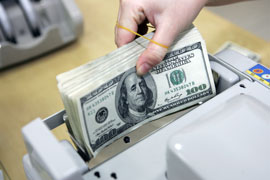
The zambian government has recently re-introduced the statutory instrument (SI) No 33 of May 2012 which banned paying,quoting or demanding to be paid in foreign currency in domestic transactions.
SOME landlords in Zambia are in the habit of demanding rental payments in US dollars. It has also been rumoured that some chief executive officers of some major parastatal companies and those of certain private sector companies are paid salaries and/or allowances in US dollars. But are such payments permissible under the Zambian law? Closely related to the foregoing, some lawyers in Zambia are reported to be in the habit of charging legal fees in US dollars, especially when they are dealing with a wealthy client such as some local politician who could have amassed wealth dubiously or when they are dealing with a client who is a foreign investor.
But are demands that legal fees be paid in US dollars permissible under the law? Some Zambian hotels too are said to be in the habit of occasionally accepting US dollar payments. But what does the law say in Zambia?As Zambia moves towards rebasing the Zambian Kwacha, it should be emphasised that, unlike some neighboring countries that permit the use of different types of currencies as forms of legal tender of payment of money, section 33(1) of the Bank of Zambia Act 1996 permits only the use of the Zambian Kwacha and Ngwee as the legal tender of payment of money in the country.
According to the deputy governor the re issuing of the SI was done to correct a typo where the previous SI referred to the non-exiting BOZ act of 2012 rathher than the correct one from 1996.
All contents remained the same as the previous act.
The truth of the matter is that the previous SI was not implemented effectively.This was the reason that the inclusion of a 10 year jail sentence was explicitly implied in the new SI.
The more important question to ask is what effect does this have on the economy.One clear disadvantage is that money kept in dollars earns a better interest than that kept in Kwacha.Also borrowing in local currency has always been at higher interest rates,the reason for this possibly being a hedge against inflation.
The truth is that dollarisation characterised the zambian economy for a long time with firms freely quoting in dollars.The problem with this is that it increased the incentive to hold money in dollars,so whenever BOZ made an open market operation to buy dollars off the market,it would not be as effective.For example earlier this year BOZ depleted its reserves in an effort to intervene in the forex market where the kwacha had been depreciating uncontrollably against the dollar.The effect of this intervention was weak at the most and failed to yield substantial gains due to the high demand of the dollar for local transactions.The good thing is that foreigners can still hold their money in dollars in their bank accounts but will have to convert them if the wish to transact. However, some critics might be wondering what would happen when it comes to payments in Zambia for intra-regional or cross-border international trade transactions. As long as such foreign-originating payments are being cashed out in Zambia, notwithstanding that the money transfer could have been wired in US dollars and to a US dollar bank account in Zambia, the actual over-the-counter payment should appear in Zambian Kwacha. This argument is in line with section 4(2) of the Bank of Zambia (Currency) Regulations 2012. Section 2 of Zambia’s Prohibition and Prevention of Money Laundering Act 2001 defines ‘money laundering’ as: (a) engaging, directly or indirectly, in a business transaction that involves property acquired with proceeds of crime; (b) receiving, possessing, concealing, disguising, disposing of or bringing into Zambia, any property derived or realised directly or indirectly from illegal activity; or (c) the retention or acquisition of property knowing that the property is, derived or realised, directly or indirectly, from illegal activity. And the term ‘illegal activity’ is defined in the same statutory provision of the Prohibition and Prevention of Money Laundering Act 2001 as any activity, whenever or wherever carried out which under any written law in the Republic of Zambia amounts to a crime.
Although the Bank of Zambia Act 1996 does not criminalise the illegal tendering of payment of money using foreign currency within Zambia, such tendering is illegal because section 4 of the recently promulgated Bank of Zambia (Currency) Regulations 2012 prohibits the tendering of payment of money in Zambia using foreign currency. And section 6 of these regulations criminalises the tendering of payment of money using foreign currency. Viewed from this angle, a client can, and has the right to, refuse to pay in US dollars even after eating a meal at a hotel. Likewise, a tenant can refuse to pay rentals in US dollars. Instead, both the two payees here can opt to either report the matter to the police or simply pay the US dollars equivalent in Zambian Kwacha even though the understanding was that the payment would be made in US dollars.
Long Story short the anti dollarisation is not something new but rather something that was not enforced,It immasculated BOZ forex market operations and generally undermined the Zambian Kwacha.
References on the acts specific laws include Kenneth Mwenda a Senior Counsel at the World Bank in Washington DC, USA, as well as Extraordinary Professor of Law at the University of Lusaka, Zambia


 Posts
Posts

